THE SYRUP
Hotter means drier
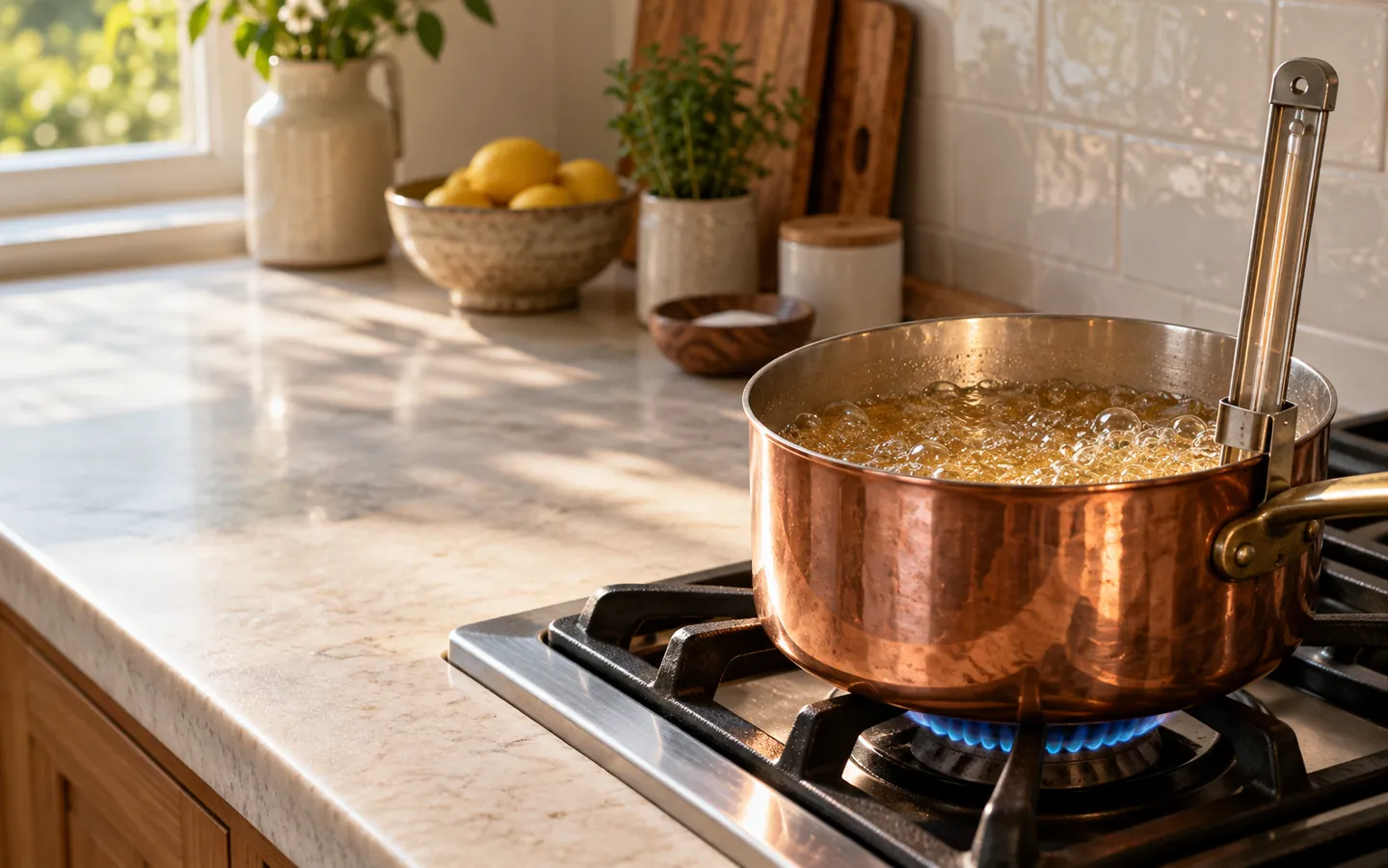
As syrup boils, water evaporates and the temperature rises. At thread stage it is about 80% sugar; at hard crack about 99%.
Check a stage bittybitesweets
THE SCIENCE OF SWEETS
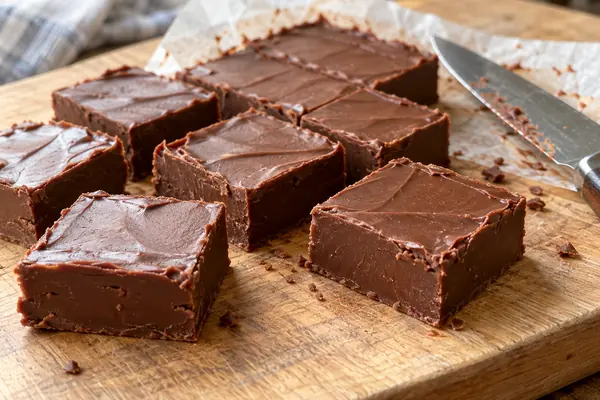
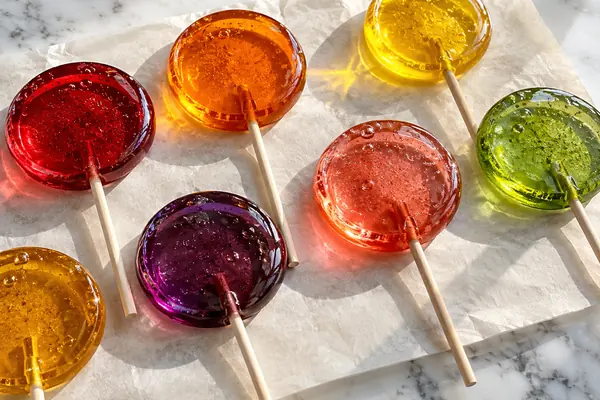
Fudge and lollipops start in the same pan.
Sugar and water are boiled until the water goes and the sugar gets stronger. The highest temperature the syrup reaches, and whether crystals are allowed to grow, decide whether it cools into fudge, caramel or a glassy boiled sweet.
SUGAR STAGES from thread to crack
Check a stageTHE SHORT ANSWER
As water boils off, the sugar gets stronger and hotter.
Each stage cools into a different texture.
THE SYRUP
As syrup boils, water evaporates and the temperature rises. At thread stage it is about 80% sugar; at hard crack about 99%.
Check a stageFUDGE
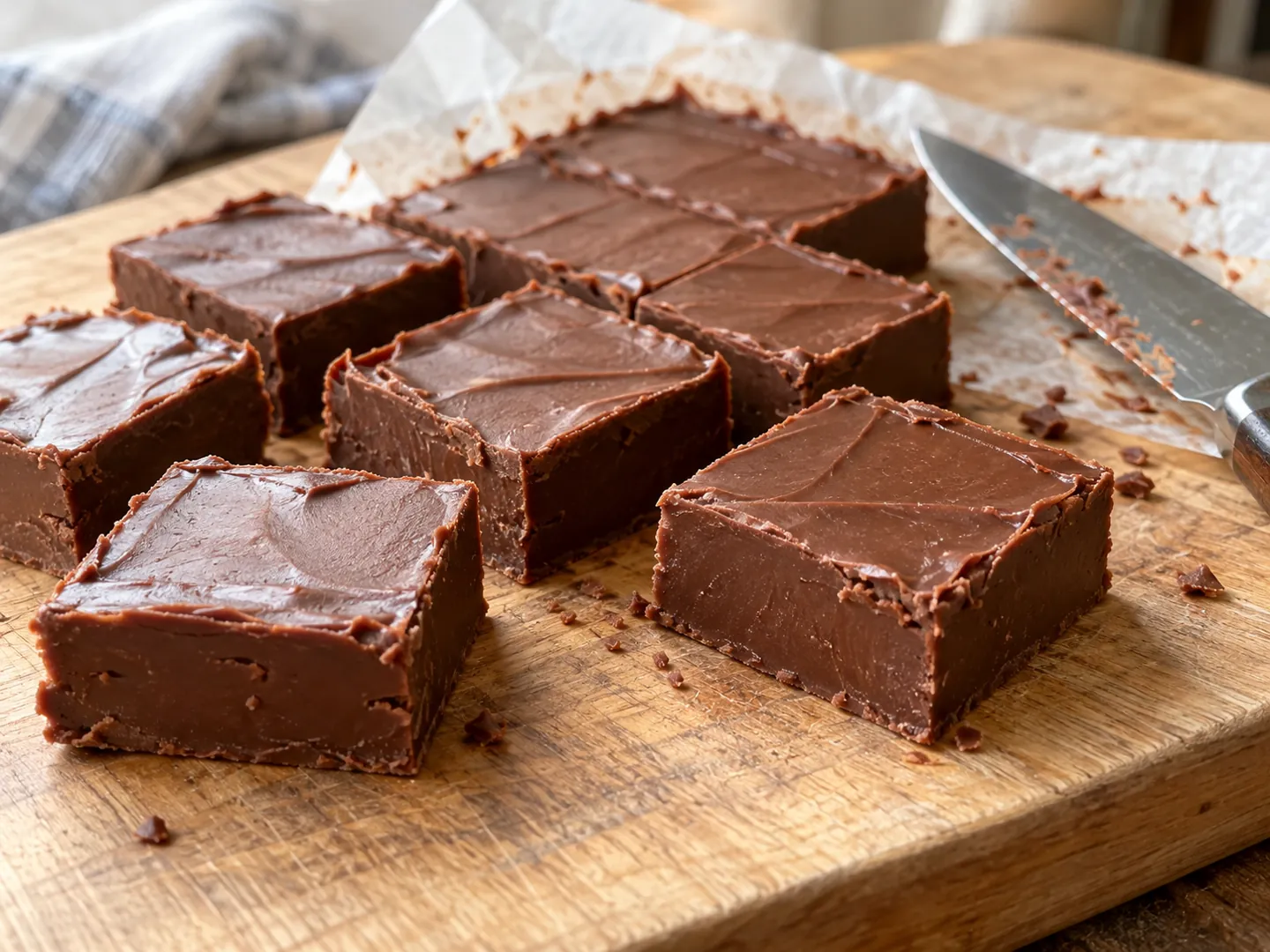
Fudge is a crystalline sweet. It is cooked to soft ball, cooled undisturbed, then stirred so microcrystals give it a firm but smooth texture.
How it worksLOLLIPOPS
Boiled sweets and lollipops are non-crystalline. They reach hard crack, and makers add corn syrup or acid to stop crystals forming.
See the numbers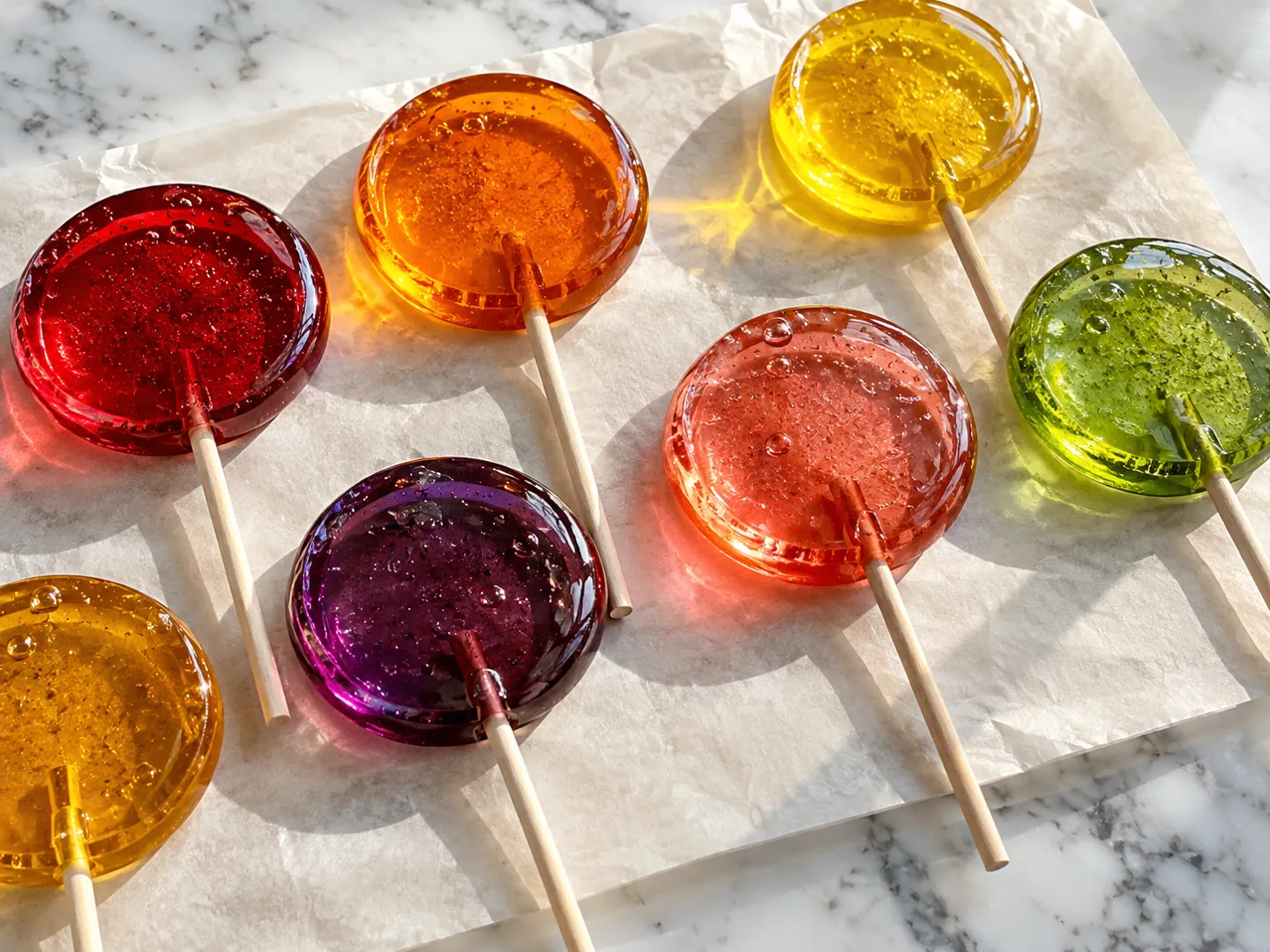
FOUR KITCHEN SECRETS
Sweet makers use a few simple tricks to decide whether sugar crystals grow or not. The syrup gets very hot, so the Exploratorium says children should only make sweets with an adult's help.
Both Exploratorium recipes say to stop stirring when the syrup starts to boil and let it cook undisturbed.
A pastry brush dipped in warm water dissolves stray sugar crystals on the sides, which could seed unwanted crystals.
Fudge rests until it is much cooler, then is stirred until it sets, giving tiny crystals and a smooth bite.
Corn syrup, or an acid such as lemon juice, splits or crowds sucrose so a lollipop stays glassy.
TWO NUMBERS WORTH KNOWING
One number for glassy sweets,
one for smooth fudge.
50:50
Sugar to corn syrup, a common lollipop mix
Corn syrup breaks down to glucose when heated. Its smaller molecules get in the way of sucrose crystals, so the sweet sets clear instead of grainy.
LOLLIPOPS · ROYAL SOCIETY OF CHEMISTRY
15–20 min
Stirring time for fudge to set
After the syrup has cooled, steady stirring turns it from glossy to dull, lighter and stiffer. Stirring while it is still too hot can make coarse, grainy fudge.
FUDGE · EXPLORATORIUM
The Exploratorium adds that thermometers should be checked in plain boiling water first, and that temperatures drop at altitude.
A QUICK STAGE CHECK
Pick a sugar stage to see its temperature, how much of the syrup is sugar, and which sweets are made there. The bar shows the sugar concentration.
Temperatures from the Royal Society of Chemistry's Sugar Rush activity. They apply at sea level.
THE COLD WATER TEST
Sugar stages are named after what a drop of syrup does in cold water: a thread, a soft ball, a firm ball, a hard ball, or threads that crack. Candy makers used this test before thermometers were common.
Past hard crack the water is gone. The RSC lists clear liquid at 160 °C, liquid caramel at 170 °C and burnt sugar at 177 °C. Let any test drop cool in the water for a few moments before touching it.
Questions
Fudge is cooked to soft ball, about 112–116 °C, when the syrup is around 85% sugar. Boiled sweets reach hard crack, about 146–154 °C and 99% sugar, so almost no water is left.
Fudge needs many tiny crystals. The Exploratorium warns that beating too long or too hard, or stirring while the fudge is still too hot, can give a coarse, grainy result.
The Royal Society of Chemistry explains that corn syrup provides glucose, whose smaller molecules interfere with sucrose crystals. A 50:50 ratio of sugar to corn syrup is often used in lollipops.
Drop a little hot syrup into cold water and see what it forms: a thread, a soft or firm ball, or brittle threads. The Exploratorium suggests using it with a candy thermometer for accuracy.
Both Exploratorium recipes, for fudge and for lollipops, advise against making them on a rainy or humid day.
Updated
ABOUT THIS NAME
bittybitesweets.com is part of the DoodleSale portfolio. It isn't in an auction right now, but you can ask about leasing it.